
The post Top Market Rent vs. Optimal Rent: What Smart Property Owners Should Know appeared first on Property Management Experts, Inc. Blog.
]]>
Top Market Rent vs. Optimal Rent: What Smart Property Owners Should Know
Many rental property owners naturally want to achieve the highest possible rent for their property. On the surface, that approach seems logical—higher rent should mean higher income. However, experienced professionals in the rental industry know that charging the highest rent isn’t always the most profitable strategy.
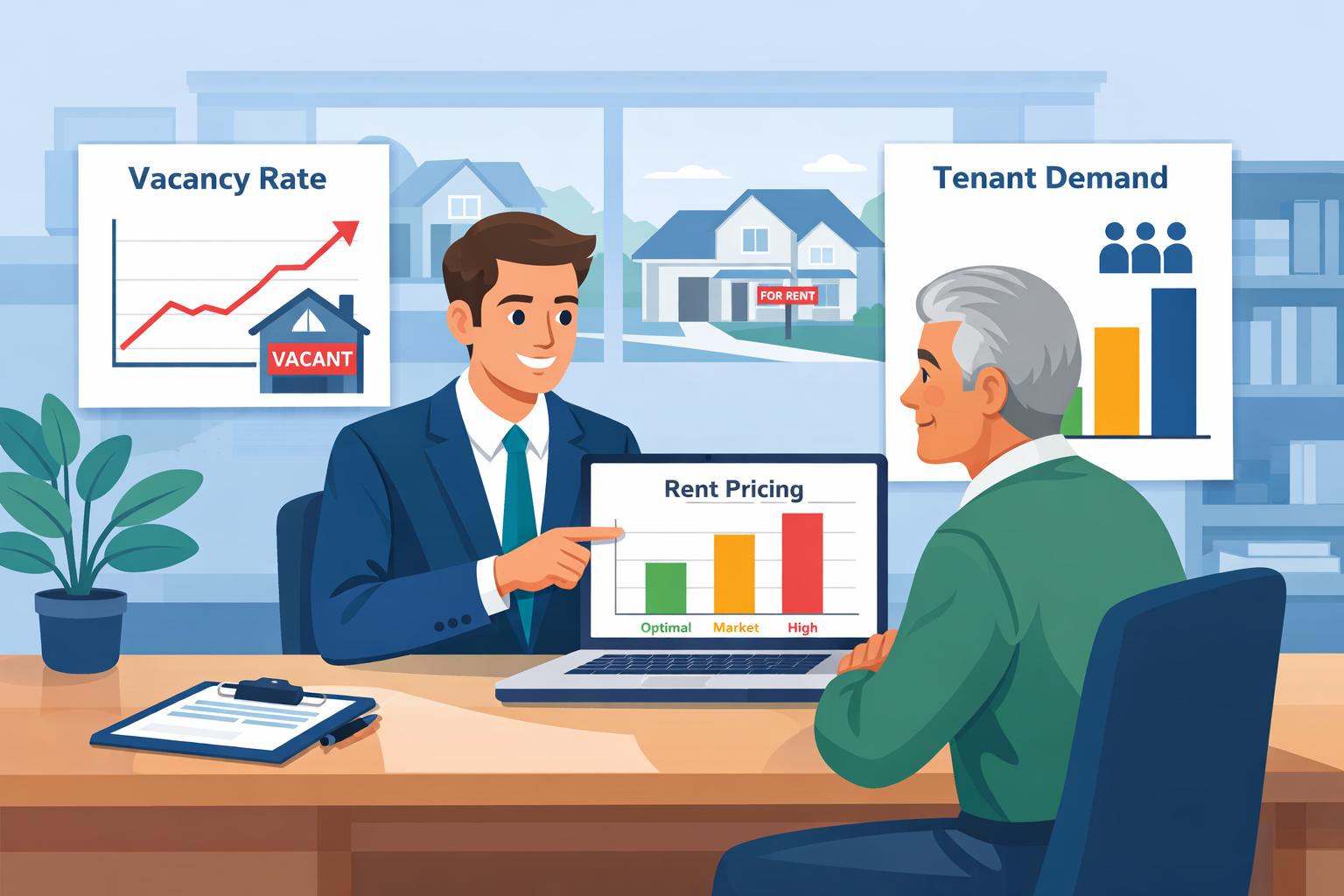
At Property Management Experts (PME), we often explain to property owners that the goal is not simply to reach the highest advertised price in the market. Instead, the objective is to find the optimal rent—the price that maximizes long-term income while minimizing vacancy and tenant turnover.
Understanding the difference between top market rent and optimal rent can make a significant difference in the financial performance of your investment property.
Understanding Market Rent vs. Optimal Rent
Market rent is often defined as the highest price a rental property might command under ideal conditions. It represents the top end of the rental range in a particular neighborhood or property type.
However, what works in theory does not always work in practice.
Optimal rent, on the other hand, is the price point that balances several important factors:
- Tenant demand
- Days on market
- Tenant quality
- Renewal probability
- Long-term occupancy
While market rent focuses on the highest possible number, optimal rent focuses on overall performance over time.
For a professional property management company, the goal is not simply to win a lease at the highest possible price—it’s to ensure the property performs consistently year after year.
Why Pricing Too High Can Hurt Your Rental Performance
When a rental property is priced at the absolute top of the market, several unintended consequences can occur.
Smaller Tenant Pool
Higher pricing naturally reduces the number of potential applicants. Many qualified renters will filter their search results based on price, which means your property may not even appear in their search results.
Fewer applicants can lead to longer vacancy periods, which directly impacts your income.
Longer Days on Market
Even in strong rental markets, overpriced properties often sit longer before receiving applications. Prospective tenants compare multiple listings and are quick to recognize when a property appears overpriced compared to similar options.
A property that sits vacant for weeks or months can quickly erase the financial benefit of charging slightly higher rent.
The Psychology of Rent Pricing
Rental pricing doesn’t just affect affordability—it also affects tenant perception and behavior.
Tenants who pay top-of-market rent often have higher expectations. They may be less tolerant of minor inconveniences and quicker to request repairs or improvements.
In some cases, these tenants are also more likely to move when they find a better deal elsewhere.
Conversely, tenants who feel they are receiving fair value for their rent tend to:
- Stay longer
- Renew their leases with reasonable increases
- Take better care of the property
- Communicate more proactively with property managers
This pricing psychology plays an important role in tenant retention, which is one of the most valuable drivers of long-term rental income.
Vacancy Is the Real Profit Killer
One of the biggest financial risks in rental property ownership is vacancy.
Even a small increase in vacancy can quickly offset the benefits of charging higher rent.
For example, imagine increasing rent by $100 per month in hopes of maximizing income. If the property then sits vacant for three additional weeks, the lost income could easily exceed the expected gain from the higher rent.
Vacancy also creates additional costs such as:
- Marketing and advertising expenses
- Property showings and leasing time
- Cleaning and turnover repairs
- Administrative costs
When property managers evaluate pricing strategy, we focus on annualized performance, not just the monthly rent amount.
The Value of Long-Term Tenants
Tenant turnover can be surprisingly expensive.
Each time a tenant moves out, landlords may incur:
- Make-ready repairs
- Professional cleaning
- New marketing costs
- Leasing fees
- Lost rent during vacancy
Strategic rent pricing helps reduce turnover by attracting tenants who feel confident that they are receiving good value.
Tenants who start their lease at a sustainable price point are more likely to:
- Renew their lease
- Accept moderate annual rent increases
- Treat the property as a long-term home
Over time, stable tenancy often produces higher net income than chasing peak rental prices.
How Property Management Experts Determines the Right Rent
At Property Management Experts, we take a data-driven approach when determining rental pricing for our clients.
Rather than simply listing a property at the highest possible price, we evaluate multiple factors, including:
- Current rental market conditions in Stockton and surrounding areas
- Comparable rental properties
- Historical leasing data
- Days-on-market trends
- Tenant demand and applicant quality
- Property condition and amenities
This approach allows us to recommend an optimal rent strategy designed to minimize vacancy and maximize long-term returns.
As a trusted property management company serving Stockton and the Central Valley, our goal is always to protect the financial performance of the properties we manage.
The Bottom Line for Property Owners
It’s understandable that property owners want to achieve the highest rent possible. However, focusing solely on the top number can sometimes lead to unintended consequences.
The most successful rental strategies focus on:
- Maximizing annual income
- Reducing vacancy time
- Attracting strong tenants
- Encouraging lease renewals
- Protecting the long-term value of the property
Optimal pricing helps achieve all of these goals.
Partner with Property Management Experts
Pricing a rental property correctly requires experience, local market knowledge, and careful analysis.
At Property Management Experts, we help property owners throughout Stockton, Lodi, Tracy, and the surrounding Central Valley communities make informed pricing decisions that support long-term success.
If you’re wondering what rent your property should command in today’s market, our team would be happy to help.
Contact Property Management Experts today to request a professional rental analysis and learn how the right pricing strategy can improve your property’s performance.
The post Top Market Rent vs. Optimal Rent: What Smart Property Owners Should Know appeared first on Property Management Experts, Inc. Blog.
]]>The post California Assembly Bill 628 (AB 628): What Landlords Need to Know About New Habitability Requirements appeared first on Property Management Experts, Inc. Blog.
]]>California rental laws continue to evolve, and staying informed is more important than ever for property owners. One of the most recent changes is Assembly Bill 628 (AB 628), approved by Governor Gavin Newsom on October 6, 2025. This new law updates California’s habitability standards and will impact how certain rental units are equipped moving forward.
If you own or manage residential rental property in California, here’s a straightforward breakdown of what AB 628 means for you—and what steps you should take now to prepare.

What Is Assembly Bill 628?
AB 628 (Chapter 342, Statutes of 2025) amends California Civil Code Section 1941.1, which outlines the minimum conditions required for a rental unit to be considered habitable.
Historically, California law required rental units to meet basic health and safety standards but did not explicitly require landlords to provide major kitchen appliances such as stoves or refrigerators. AB 628 changes that.
Beginning in 2026, certain appliances will now be considered part of a rental unit’s basic habitability requirements.
New Habitability Requirements Under AB 628
Under AB 628, landlords must provide and maintain the following appliances in good working order:
Stove Requirement
The stove must be capable of safely generating heat for cooking. This requirement applies regardless of whether the appliance is gas or electric.
Refrigerator Requirement
The refrigerator must be capable of safely storing food and must remain operational throughout the tenancy.
These appliances are now legally considered part of a tenantable dwelling under California law.
Recall and Safety Obligations
AB 628 also addresses appliance safety concerns. If a stove or refrigerator provided by the landlord becomes subject to a manufacturer or government recall, the landlord must repair or replace the appliance within 30 days after receiving notice of the recall.
This makes it important for property owners and managers to keep records of appliance models and stay aware of safety notices.
When Does AB 628 Take Effect?
The new requirements apply to leases that are entered into, renewed, amended, or extended on or after January 1, 2026.
Existing leases that are not modified before that date are generally not affected until renewal or amendment.
Exceptions to the Law
AB 628 does not apply to all housing types. Exempt properties include:
- Permanent supportive housing
- Single-room occupancy (SRO) units with shared kitchens
- Assisted living facilities or residential hotels with communal kitchens
These exemptions recognize housing models where individual in-unit appliances may not be practical or customary.
Tenant-Provided Refrigerators: What’s Still Allowed
In limited situations, the law allows a landlord and tenant to mutually agree at lease signing that the tenant will provide their own refrigerator. This agreement must be clearly documented.
If the tenant later withdraws consent, the landlord must provide a refrigerator. Landlords cannot require tenants to supply their own refrigerator as a condition of tenancy.
How AB 628 Impacts Landlords
For many landlords, this law means adjusting long-standing practices—especially for properties where tenants historically supplied their own appliances.
Potential impacts include increased upfront costs for appliance purchases, ongoing maintenance and replacement obligations, updates to lease agreements and property standards, and greater emphasis on documentation and compliance.
While the law adds responsibility, it also creates consistency and clearer expectations across California rental housing.
What Landlords Should Do Now
Before January 1, 2026, landlords should begin preparing by:
- Reviewing properties to identify units without landlord-provided stoves or refrigerators
- Budgeting for appliance purchases and replacements
- Inspecting existing appliances for safety and condition
- Updating lease templates and house rules
- Tracking appliance models, warranties, and recall notices
Working with a licensed property management company can significantly reduce compliance risk and administrative burden.
How Professional Property Management Helps
Staying compliant with California’s changing rental laws requires time, experience, and constant monitoring. Professional property management helps by keeping leases and policies legally up to date, managing appliance installation, repairs, and recalls, reducing exposure to habitability claims, and protecting long-term property value and rental income.
Final Thoughts
AB 628 represents another step in California’s ongoing expansion of tenant habitability standards. While it introduces new obligations for landlords, early preparation and proper management can make the transition smooth and manageable.
If you have questions about how AB 628 affects your rental property—or want help preparing before the law takes effect—working with experienced professionals can save time, money, and stress.
Staying informed is no longer optional. It’s part of responsible property ownership in California.
The post California Assembly Bill 628 (AB 628): What Landlords Need to Know About New Habitability Requirements appeared first on Property Management Experts, Inc. Blog.
]]>The post Looking Ahead: A New Year with Your Trusted Property Management Company appeared first on Property Management Experts, Inc. Blog.
]]>
As we close the chapter on 2025, all of us at Property Management Experts would like to take a moment to say—thank you.
This past year has been one of growth, learning, and renewed commitment to serving property owners and tenants across Stockton, Lodi, Tracy, and surrounding communities. From new partnerships to innovative service upgrades, we’re proud of what we’ve accomplished—and even more excited for what’s to come.
Reflecting on a Successful 2025

Thanks to the trust of our clients and the dedication of our team, 2025 marked several major milestones for our property management company:
 Expanded our portfolio of single-family and multi-unit rentals in Stockton and beyond
- Improved vacancy turnaround time and tenant retention
- Navigated critical legal updates like California’s AB 246, helping protect both landlords and tenants
- Enhanced maintenance response times and communication through upgraded tools
- Deepened community engagement through local events and outreach
Whether you’ve been with us for years or just joined PME in 2025, we appreciate your confidence in us to protect your investments and deliver peace of mind.
Why Property Management Still Matters in 2026
The rental landscape in California continues to evolve—fast. Laws change. Tenant expectations rise. And owning rental property comes with both opportunity and risk.
That’s why partnering with a reliable property management company has never been more important.
In 2026, we'll continue to help landlords:
- Stay compliant with new state laws (like the Social Security Tenant Protection Act)
- Reduce stress with proactive maintenance and inspections
- Maximize rental income through strategic pricing and marketing
- Foster respectful, long-term tenant relationships
- Respond faster with streamlined systems and support
Our Promise for the New Year
At PME, we don’t just manage properties—we manage relationships, reputations, and results. And we’re committed to raising the bar in 2026.
Expect even more:
- ���� Technology upgrades for owners and tenants
- ���� Local expertise to help you grow your portfolio
- ���� Knowledge-sharing on legal changes and market shifts
- ���� Open communication and transparency at every step
Our mission remains the same: to be the most trusted property management company in the Central Valley.
Let’s Grow Together in 2026
To our current clients: we’re honored to manage your properties.
To future partners: we’d love the chance to show you how PME can simplify and strengthen your rental investments.
���� Let’s make 2026 your most successful year yet.
���� Call us at (209) 644-6402 or visit www.pmerents.com to schedule a consultation.
Cheers to a fresh start, strong leases, and happy tenants!
— Your team at Property Management Experts
The post Looking Ahead: A New Year with Your Trusted Property Management Company appeared first on Property Management Experts, Inc. Blog.
]]>The post What Is the Social Security Tenant Protection Act of 2025? A Guide for California Landlords appeared first on Property Management Experts, Inc. Blog.
]]>Managing rental property in California comes with plenty of challenges—and staying on top of new laws is one of them. In 2025, the Social Security Tenant Protection Act (Assembly Bill 246) was signed into law to address the growing concerns of tenants who rely on Social Security income to pay rent.
For landlords, this new law introduces important eviction protections that could change the way you handle nonpayment cases. Here’s a straightforward breakdown of what the law means, who it protects, and what you need to do to stay compliant.

 What Is AB 246?
The Social Security Tenant Protection Act of 2025, officially known as Assembly Bill 246, was enacted as California Civil Code §1946.3. This law provides tenants with a legal defense against eviction if they’re unable to pay rent due to a delay, reduction, or termination of their Social Security benefits.
The legislation was introduced after concerns arose during recent government shutdowns, which threatened to delay benefit payments. Lawmakers acted to create protections that extend beyond shutdowns, recognizing that Social Security income disruptions can happen for many reasons.
Who Qualifies for Protection?
The law protects any tenant household in which at least one member receives Social Security benefits—this includes:
- Retirement benefits
- Disability benefits (SSDI)
- Supplemental Security Income (SSI)
Tenants may invoke this defense if their Social Security income is wrongfully:
- Terminated
- Delayed
- Reduced
Note: Tenants must not be at fault for the income disruption.
How the Eviction Process Changes
Before AB 246, landlords could begin eviction proceedings shortly after serving a 3-day notice to pay rent or quit. Now, if a tenant claims protection under this law, the court must pause the eviction.
Here’s how the timeline works:
- The court stays (pauses) the Unlawful Detainer (UD) case.
- The stay lasts until the earlier of:
- 14 days after Social Security benefits resume, or
- 6 months from the date the stay was issued
Once benefits resume, the tenant has 14 days to pay the back rent.
What Proof Can Landlords Request?
Landlords are allowed to request reasonable documentation that shows:
- The tenant’s household includes a Social Security recipient
- The income disruption was not their fault
- The disruption prevented rent payment
Acceptable documents may include:
- SSA letters showing delay or reduction
- Tenant declarations
- Bank statements showing missing deposits
What AB 246 Does Not Cover
There are important limits to this protection:
 It only applies to nonpayment of rent
- It doesn’t apply to other “just cause” evictions
- It doesn’t forgive rent—the tenant still owes all missed payments
- It’s not indefinite—stays end after six months or 14 days post-benefit
What Landlords Should Do Now
If you manage your own properties or work with tenants on Social Security, here’s how to stay ahead of the curve:
- Open communication with tenants about payment issues
- Document all notices, rent due dates, and tenant responses
- Stay updated on AB 246 interpretations and court trends
- Avoid illegal eviction threats that don’t comply with new protections
Pro Tip: Eviction mistakes can cost you thousands in delays, legal fees, and court dismissals. Work with professionals who know the law.
How Property Management Experts Helps You Stay Compliant
At Property Management Experts, we help landlords across Stockton, Lodi, Tracy, and the San Joaquin County area navigate complex rental laws—so you don’t have to.
Our experienced team will:
- Handle rent collection and notices
- Manage legal paperwork and timelines
- Communicate with tenants and courts when needed
- Keep you compliant with California’s evolving laws
Final Thoughts
The Social Security Tenant Protection Act reflects California’s ongoing efforts to protect vulnerable renters—but it also places a bigger burden on landlords. With the right guidance, you can respect the law, protect your investment, and maintain healthy tenant relationships.
Sources
- Assembly Bill 246 – CA Legislative Info
- Civil Code §1946.3 – California Law
- First Tuesday Journal: Tenant Protections
Need Help with Rental Law Compliance?
Let PME be your trusted partner in legal property management. Call us at (209) 644-6402 or visit www.pmerents.com
The post What Is the Social Security Tenant Protection Act of 2025? A Guide for California Landlords appeared first on Property Management Experts, Inc. Blog.
]]>The post New California Law Protects Tenants Receiving Social Security Income: What Landlords and Property Managers Need to Know appeared first on Property Management Experts, Inc. Blog.
]]>A new California law (AB 246) provides eviction protections for tenants who experience delays or disruptions in their Social Security income. For property owners and property managers in Stockton and throughout California’s Central Valley, this law introduces important new responsibilities—especially when filing eviction actions for nonpayment of rent.
Here’s what you need to know and how Property Management Experts (PME) helps ensure compliance while maintaining positive landlord-tenant relationships.

What Is Assembly Bill 246?
Assembly Bill 246, now codified as Civil Code §1946.3, provides a legal defense against eviction (also known as unlawful detainer or UD) when a tenant’s household experiences a delay, reduction, or wrongful termination of their Social Security income.
This law was introduced after the 2025 federal government shutdown—the longest in U.S. history at 43 days—sparked concern about income interruptions for vulnerable renters.
Key Point: The law is not limited to federal shutdowns. It applies to any delay in Social Security income, regardless of the cause, through January 20, 2029.
Who Qualifies for This Protection?
Tenants may use this legal defense if:
- Any household member receives income from Social Security (retirement, disability, or survivor benefits)
- That income has been wrongfully delayed, reduced, or cut off through no fault of the tenant
- The loss of income directly prevented the tenant from paying rent
Source: Civil Code §1946.3(c)(1)
 How the Eviction Process Changes Under This Law
Let’s say a tenant misses a rent payment. The landlord or property manager serves a:
- 3-Day Notice to Pay or Quit, or
- 3-Day Notice to Pay Rent (in just cause scenarios)
If the tenant doesn’t pay or move out, the next step is filing an unlawful detainer (UD). But under AB 246, the tenant can now inform the court that their Social Security benefits were disrupted, triggering a temporary stay (pause) of the eviction.
 The stay lasts until:
- 14 days after the benefits resume, or
- A maximum of 6 months, whichever comes first
During this time, the tenant must:
- Still reside in the unit
- Prove that the Social Security hardship is ongoing and not their fault
 What This Means for Property Owners and Managers
1. Delays in Rent Recovery
Even if a tenant owes rent, you may not be able to proceed with eviction until their Social Security benefits resume.
2. Legal Compliance is Critical
Any failure to recognize or accommodate this new defense could result in a dismissed eviction, wasted legal fees, and even liability.
3. Communication is Key
Tenants may not volunteer this information unless asked. Proactively asking about income interruptions—especially when a tenant has previously paid on time—can help you avoid unnecessary legal action.
How Property Management Experts (PME) Helps
At Property Management Experts, we stay ahead of California's evolving rental laws to protect both our owners and their tenants.
Here’s how we handle situations like these:
- We review every tenant hardship carefully to assess eligibility under Civil Code §1946.3
- We coordinate with tenants to collect documentation on Social Security disruptions
- We pause legal action if required and notify property owners about timelines and next steps
- We prioritize retention and stability while still advocating for owner cash flow and fairness
Our goal is always to avoid unnecessary court costs, comply with the law, and maintain long-term rental success.

Final Thoughts
This new law reflects California’s ongoing efforts to protect vulnerable tenants—and adds new layers of responsibility for landlords and property managers. Understanding and correctly responding to Social Security hardship claims is now a legal obligation, not just a courtesy.
If you’re a rental property owner in Stockton or the surrounding areas and you’re unsure how to navigate California’s complex legal landscape, Property Management Experts is here to help.
Need Help Managing Compliance and Evictions the Right Way?
Let our experienced team guide you through legal changes like AB 246 while ensuring your investments stay protected.
Get in touch today for a free property management consultation.
Serving Stockton, Lodi, Manteca, Tracy & beyond
www.pmerents.com
Sources:
- California Civil Code §1946.3
- First Tuesday Journal: New Law Protects Tenants Receiving Social Security
- Social Security Administration
The post New California Law Protects Tenants Receiving Social Security Income: What Landlords and Property Managers Need to Know appeared first on Property Management Experts, Inc. Blog.
]]>The post What Happens If You Manage Property Without a License in California? appeared first on Property Management Experts, Inc. Blog.
]]>Managing rental property in California comes with serious legal responsibilities. Many owners and individuals mistakenly believe they can manage properties for others without a real estate license—but under California law, that’s not the case. The California Department of Real Estate (DRE) regulates property management activities, and operating without a license can lead to fines, civil penalties, and even criminal charges.
If you’re wondering what happens when an unlicensed property manager handles rentals in California, here’s what every owner and manager should know.
Understanding California’s Property Management Licensing Laws
California Business and Professions Code Section 10131 clearly defines the acts that require a real estate license. According to the DRE, a person must hold a valid real estate broker’s license (or be employed under one) to legally:
- Lease or rent property on behalf of another person
- Collect rent or other payments for a rental property
- Negotiate leases or rental terms
- Advertise or market property for rent on behalf of others
Anyone performing these activities for compensation—without holding a license—is violating state law.
���� Source: California Department of Real Estate — DRE Licensing Requirements
Learn More: What Does a Property Manager Actually Do?
The Risks of Managing Property Without a License
Operating as an unlicensed property manager in California exposes you to multiple legal and financial risks, including:
-
Civil Fines and Penalties
Unlicensed activity can result in civil fines of up to $20,000 for individuals and $60,000 for corporations, as outlined in California Business and Professions Code §10185. -
Potential Criminal Charges
In some cases, managing property without a license may be prosecuted as a misdemeanor, leading to additional penalties or probation. -
Loss of Legal Protection
Unlicensed property managers cannot legally collect commissions, enforce leases, or represent property owners in court. Any contracts or agreements made may be deemed unenforceable. -
Damaged Reputation and Liability
If a tenant or owner files a complaint, it can result in lawsuits, DRE investigations, and irreparable harm to your professional credibility.
Exemptions and Limited Cases
There are a few situations where an individual may manage property without holding a real estate license, including:
- On-site residential managers employed directly by the property owner and living on-site.
- Property owners managing their own real estate.
- Administrative or maintenance staff who do not engage in leasing, rent collection, or negotiation.
However, these exemptions are narrow. The moment compensation is involved for activities like leasing, rent collection, or tenant negotiation on behalf of another, a license is required.
���� Source: California Business and Professions Code §10131 and §10133.
Why Property Owners Should Always Hire a Licensed Manager
Hiring a licensed property management company offers more than just compliance—it ensures accountability, expertise, and legal protection. Licensed managers are required to:
- Maintain trust accounts for rent and deposits
- Follow Fair Housing laws and California Civil Code §1941.1 habitability standards
- Handle repairs, maintenance, and tenant issues professionally
- Operate under DRE supervision and ethical guidelines
When you work with a licensed firm like Property Management Experts, you safeguard your investment and avoid costly legal mistakes.
Learn More: Do You Need a License to Be a Property Manager in California?
How to Verify a Property Manager’s License
You can confirm a property manager’s license status anytime using the DRE License Lookup Tool:
���� https://www2.dre.ca.gov/PublicASP/pplinfo.asp
Always verify:
- Broker or salesperson license number
- Expiration date
- Any disciplinary actions
Partner With Licensed Professionals — Property Management Experts
At Property Management Experts, we believe professionalism begins with compliance. Our team is fully licensed under the California DRE and experienced in managing both residential and commercial properties across Stockton, Tracy, and Modesto.
We handle everything from tenant placement and maintenance to rent collection and legal compliance—so you can enjoy peace of mind knowing your property is managed the right way.
���� Call us: (209) 465-5000
���� Visit: www.pmerents.com
The post What Happens If You Manage Property Without a License in California? appeared first on Property Management Experts, Inc. Blog.
]]>The post Top 5 Mistakes Unlicensed Property Managers Make in California appeared first on Property Management Experts, Inc. Blog.
]]> Top 5 Mistakes Unlicensed Property Managers Make in California — And How to Avoid Them
Introduction
Managing rental properties in California without a license might seem harmless—until it isn't. Every year, unlicensed individuals take on property management duties without realizing that they're violating state law.
The California Department of Real Estate (DRE) has strict rules about who can collect rent, negotiate leases, or advertise rental properties on behalf of others. Even small mistakes can lead to fines, lawsuits, or invalid lease agreements.
Here are the top five mistakes unlicensed property managers make in California—and how to avoid them by working with a fully licensed team like Property Management Experts.
1. Mishandling Rent and Security Deposits
One of the biggest pitfalls of unlicensed property management is improperly handling tenant funds.
Under California Civil Code §1950.5, property managers must hold tenant security deposits in trust and return them within specific timeframes after move-out. Unlicensed individuals often:
- Deposit funds into personal accounts
- Fail to provide itemized statements
- Withhold deposits illegally
These actions violate DRE trust account laws and can expose both the manager and the property owner to serious legal consequences.
Source: California Civil Code §1950.5
2. Using Invalid or Non-Compliant Lease Agreements
Many unlicensed property managers download generic leases online, unaware that California's rental laws change frequently.
Mistakes often include:
- Outdated disclosures (e.g., mold, pest control, bedbug addendums)
- Missing Fair Housing or lead paint clauses
- Incorrect notice periods or unlawful terms
A poorly written lease can make it impossible to enforce tenant obligations and leave owners unprotected in court.
Working with a licensed company ensures leases comply with California Civil Code §1940–§1954, providing legal protection for both parties.
3. Violating Fair Housing Laws
The Federal Fair Housing Act and California's Fair Employment and Housing Act (FEHA) prohibit discrimination in housing based on race, gender, disability, family status, and other protected categories.
Unlicensed managers frequently make mistakes such as:
- Screening tenants with biased or inconsistent criteria
- Rejecting applicants based on family size or income type
- Writing discriminatory language in advertisements ("no kids," "adults only," etc.)
Violations can lead to lawsuits, DRE penalties, and civil fines of up to $16,000 per violation (and higher for repeat offenders).
4. Neglecting Repairs and Habitability Standards
California's implied warranty of habitability requires landlords to maintain properties in safe, livable condition. Unlicensed managers often delay or mishandle repairs, leading to code violations and tenant claims.
Common issues include:
- Ignoring broken heaters or plumbing
- Failing to address pest infestations or mold
- Overlooking smoke and carbon monoxide detector laws
These violations can trigger civil penalties, lawsuits, and in extreme cases, city enforcement actions.
Source: California Civil Code §1941.1 – Habitability Standards5. Advertising or Managing Rentals Without Proper Licensing
Perhaps the most common mistake is advertising or managing rentals for others without a license.
Even listing a property online, showing units, or collecting rent for compensation qualifies as real estate activity under California Business and Professions Code §10131.
Unlicensed individuals caught performing these acts can face:
- Cease-and-desist orders from the DRE
- Fines up to $20,000 per incident
- Possible misdemeanor charges
Avoid Costly Mistakes — Work With Licensed Experts
When you partner with a licensed property management company, you gain more than compliance—you gain confidence.
At Property Management Experts, every member of our team operates under valid California DRE licensing. We manage all aspects of rental operations:
- Rent collection and maintenance coordination
- Tenant placement and lease enforcement
- Legal compliance with Fair Housing and habitability standards
Serving Stockton, Tracy, and Modesto, we protect your investment and ensure full peace of mind.
 Call us: (209) 465-5000
Visit: www.pmerents.com
The post Top 5 Mistakes Unlicensed Property Managers Make in California appeared first on Property Management Experts, Inc. Blog.
]]>The post 🏡 New Law Alert: California Now Requires Stoves and Refrigerators in All Residential Rentals (AB 628 Explained) appeared first on Property Management Experts, Inc. Blog.
]]>Starting January 1, 2026, California landlords will face new habitability requirements under Assembly Bill No. 628 (AB 628). This law updates California Civil Code Section 1941.1 — the statute defining what makes a rental property “habitable.”
At Property Management Experts (PME), we’re helping property owners across Stockton, Tracy, Modesto, and the Central Valley prepare for these changes ahead of time to ensure full compliance and peace of mind.
What AB 628 Means for Landlords
Under AB 628, landlords will be required to provide and maintain specific kitchen appliances for all new, renewed, or amended leases beginning January 1, 2026.
- Mandatory Appliances: All qualifying residential units must include a stove and a refrigerator in safe, working condition. The stove must safely generate heat for cooking, and the refrigerator must store food at safe temperatures.
- Recall Repairs Required: If a provided appliance is subject to a manufacturer or government recall, the landlord must repair or replace it within 30 days of receiving notice.
- Tenant-Provided Option: Landlords and tenants can mutually agree that tenants will provide their own refrigerator — but this must be clearly stated in the lease. Tenants also retain the right to request that the landlord provide one later with 30 days’ written notice.
- Exemptions: Certain housing types are exempt, including permanent supportive housing, SROs with shared kitchens, residential hotels, and assisted-living or communal-kitchen facilities.
According to the California Legislative Information Portal, failure to comply may render a unit “untenantable” under Civil Code §1941.1 — potentially exposing landlords to rent-withholding, repair-and-deduct claims, or even legal action.
How This Impacts Central Valley Landlords
For property owners across San Joaquin County and surrounding areas, these new requirements mean it’s time to review leases and property readiness. Even landlords who currently provide these appliances should verify that:
- Appliances meet current safety and functionality standards.
- Lease language specifies maintenance responsibilities.
- Replacement or repair timelines are clearly defined.
These updates are especially important for landlords managing multiple units, as each lease renewed or amended after January 1, 2026, will fall under the new rule.
What Happens If You Don’t Comply?
Failing to meet habitability standards under AB 628 could expose property owners to:
- Legal liability for providing untenantable housing.
- Tenant rights to withhold rent, repair and deduct, or vacate.
- Possible damages or attorney fees if the issue is litigated.
California courts consistently interpret tenant habitability laws strictly, placing full responsibility on landlords to maintain compliance.
How Property Management Experts Helps Landlords Stay Compliant
With nearly five decades of experience serving the Central Valley, Property Management Experts has a proven track record of helping landlords stay ahead of California’s evolving regulations.
- Lease Compliance Reviews: PME is already updating lease templates to align with AB 628 requirements.
- Appliance Maintenance Coordination: Our property management team tracks repairs, recalls, and replacements to ensure compliance and tenant satisfaction.
- Tenant Communication: PME keeps residents informed about updates to maintain transparency and prevent disputes.
- Ongoing Education: We continuously monitor legal changes from sources like the California Department of Real Estate (DRE) and the California State Legislature.
Our mission is simple: to make property ownership effortless and compliant, allowing landlords to focus on long-term growth instead of new regulatory headaches.
What You Should Do Before 2026
- Inspect Existing Appliances: Verify that all stoves and refrigerators are functional and safe.
- Update Your Lease Forms: Add language clarifying who provides and maintains appliances.
- Plan for Replacements: Budget for any necessary upgrades before your next lease renewal.
- Contact PME: Let our licensed property management team handle compliance updates for you.
Final Thoughts
AB 628 represents California’s continued focus on tenant safety and habitability. While the new appliance requirements may seem straightforward, failing to comply can have significant legal and financial consequences. With Property Management Experts on your side, you’ll have the expertise and systems in place to meet these new standards with confidence.
Get ahead of 2026 now — contact Property Management Experts at (209) 465-5000 or visit www.pmerents.com to schedule a compliance review today.
Sources:
- California Legislative Information: Assembly Bill 628 (2025 Session)
- California Civil Code §1941.1 — Tenant Habitability Standards
- California Department of Consumer Affairs: “California Tenants – A Guide to Residential Tenants’ and Landlords’ Rights and Responsibilities”
The post 🏡 New Law Alert: California Now Requires Stoves and Refrigerators in All Residential Rentals (AB 628 Explained) appeared first on Property Management Experts, Inc. Blog.
]]>The post Do Landlord Insurance Policies Cover Tenant Damage in California? appeared first on Property Management Experts, Inc. Blog.
]]>Owning a rental property is one of the most rewarding investments you can make—but it also comes with risks. One of the most common questions we hear from Stockton, Tracy, and Modesto property owners is: “Does my insurance cover tenant damage?” The answer is: it depends.
What Typically Isn’t Covered
- Intentional damage — vandalism or deliberate destruction by tenants is not covered.
- Normal wear and tear — worn carpet, faded paint, or scratches from daily use are excluded.
What May Be Covered
Depending on your policy, some accidental damage may be covered, such as:
- Kitchen fires or smoke damage
- Water damage from overflowing appliances or tubs
- Accidental breakage of fixtures
The Real Cost of Tenant Damage
Repair costs from tenant-caused damage often range from $5,000 to $30,000, not including lost rental income during repairs.
California Exceptions and Special Cases
- On-site managers for multifamily buildings may be exempt from licensing but have limited duties.
- Self-managing owners don’t need a license but assume the full risk of uncovered damage.
How to Protect Your Investment
- Require renters insurance in all leases
- Screen tenants carefully
- Schedule routine inspections
- Ask about policy add-ons such as sewer backup or loss-of-rents coverage
Why Work With Property Management Experts
With nearly five decades of experience in San Joaquin County, PME helps protect your investment by:
- Ensuring compliance with California rental laws
- Screening tenants with professional tools
- Reducing vacancy with PME’s online property listings portal
- Providing proactive maintenance and local expertise
Final Takeaway
Tenant damage isn’t always covered under your insurance. With the right planning and a trusted, licensed property management partner like Property Management Experts, you can safeguard your rental property and enjoy peace of mind.
Contact us today: (209) 465-5000 or visit www.pmerents.com
The post Do Landlord Insurance Policies Cover Tenant Damage in California? appeared first on Property Management Experts, Inc. Blog.
]]>The post How to Become a Property Manager in California: A Step-by-Step Guide appeared first on Property Management Experts, Inc. Blog.
]]>Property management is more than just collecting rent—it's a career built on communication, compliance, and smart decision-making.

If you're based in California and have a passion for real estate and organization, property management might be the perfect fit. At Property Management Experts, we've guided countless professionals in understanding the industry. In this guide, we’ll walk you through how to become a property manager in California, the credentials you’ll need, and what it takes to thrive in this role.
What Does a Property Manager Do?
Property managers oversee the daily operations of rental properties on behalf of landlords or real estate investors. In California, the role includes:
- Advertising and leasing units
- Screening and managing tenants
- Handling rent collection
- Coordinating repairs and maintenance
- Ensuring compliance with housing laws
- Communicating between property owners and tenants
Some work independently, while others, like our team at PME, work under licensed brokerages to serve clients across San Joaquin County and beyond.
How to Become a Property Manager in California
1. Decide: Licensed or Unlicensed Path
California allows for both licensed and unlicensed property management roles. However, being licensed opens more doors.
Licensed: Can lease, list, and manage income-producing properties
Unlicensed: Limited to administrative tasks and must work under a licensed broker
PME Tip: Many employers, including ours, prefer licensed property managers for the flexibility and professionalism they offer.
2. Complete Real Estate Education
To become licensed, enroll in a California Department of Real Estate (DRE) approved course. Courses usually cover:
- Real estate practice
- Property management
- Business law
- Risk management
Expect to complete your training in 3–6 months, depending on your pace.
3. Pass the California Real Estate Exam
After completing your coursework, apply for and pass the California Real Estate Salesperson Exam. You’ll need:
- Completed RE 435 Form
- Education certificates
- Application & exam fees
Test topics include contracts, fair housing, fiduciary duties, finance, valuation, and more.
4. Optional: Get Certified in Property Management
California doesn’t require a Property Management Certification (PMC), but it’s a great way to stand out. Organizations like the California Association of Realtors (CAR) offer PMC programs that cover:
- Residential management
- Trust accounting
- Fair housing laws
- Dealing with investors and assistance animals
5. Consider additional certifications
There are several other certifications that California property managers can earn. While these credentials aren't essential, they may make you more competitive as a job candidate:
- Certified Apartment Manager (CAM)
- Certified Property Manager (CPM)
- National Apartment Leasing Professional (NALP)
- Certified Property Manager (CPM)
Essential Skills for Success
To excel as a property manager in California, focus on developing:
- Communication & negotiation skills
- Knowledge of fair housing & tenant law
- Financial and basic accounting knowledge
- Marketing and leasing expertise
- Conflict resolution and people management
Final Thoughts from Property Management Experts
Property management in California is a career full of opportunity — especially in high-demand regions like Stockton, Lathrop, and Modesto. Whether you're just starting out or looking to level up with certifications, we hope this guide gets you one step closer to your goals.
Interested in working with a local leader in property management?
Reach out to Property Management Experts at (209) 465-5000
Learn more: www.pmerents.com
The post How to Become a Property Manager in California: A Step-by-Step Guide appeared first on Property Management Experts, Inc. Blog.
]]>