
The post Top Market Rent vs. Optimal Rent: What Smart Property Owners Should Know appeared first on Property Management Experts, Inc. Blog.
]]>
Top Market Rent vs. Optimal Rent: What Smart Property Owners Should Know
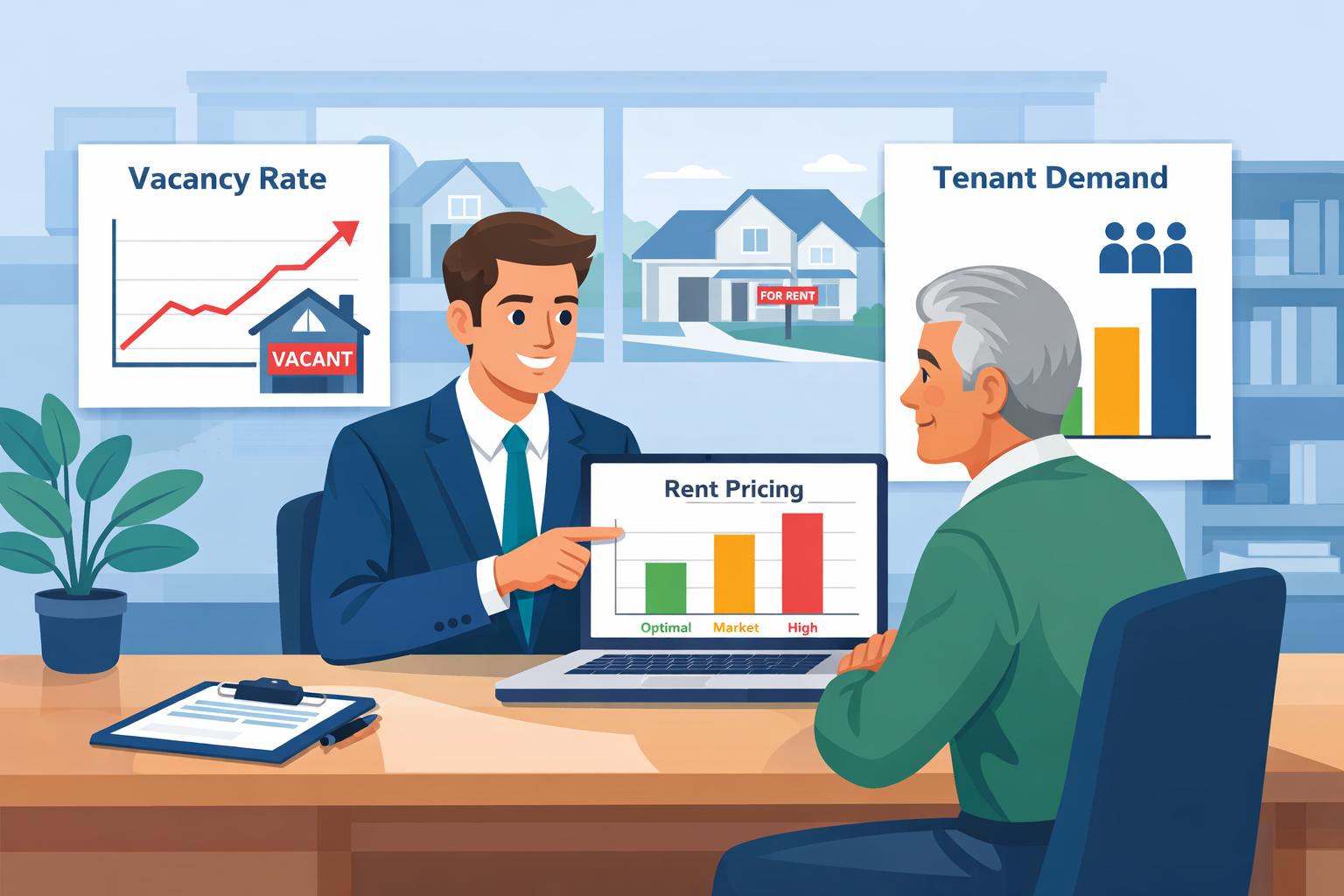
Many rental property owners naturally want to achieve the highest possible rent for their property. On the surface, that approach seems logical—higher rent should mean higher income. However, experienced professionals in the rental industry know that charging the highest rent isn’t always the most profitable strategy.
At Property Management Experts (PME), we often explain to property owners that the goal is not simply to reach the highest advertised price in the market. Instead, the objective is to find the optimal rent—the price that maximizes long-term income while minimizing vacancy and tenant turnover.
Understanding the difference between top market rent and optimal rent can make a significant difference in the financial performance of your investment property.
Understanding Market Rent vs. Optimal Rent
Market rent is often defined as the highest price a rental property might command under ideal conditions. It represents the top end of the rental range in a particular neighborhood or property type.
However, what works in theory does not always work in practice.
Optimal rent, on the other hand, is the price point that balances several important factors:
- Tenant demand
- Days on market
- Tenant quality
- Renewal probability
- Long-term occupancy
While market rent focuses on the highest possible number, optimal rent focuses on overall performance over time.
For a professional property management company, the goal is not simply to win a lease at the highest possible price—it’s to ensure the property performs consistently year after year.
Why Pricing Too High Can Hurt Your Rental Performance
When a rental property is priced at the absolute top of the market, several unintended consequences can occur.
Smaller Tenant Pool
Higher pricing naturally reduces the number of potential applicants. Many qualified renters will filter their search results based on price, which means your property may not even appear in their search results.
Fewer applicants can lead to longer vacancy periods, which directly impacts your income.
Longer Days on Market
Even in strong rental markets, overpriced properties often sit longer before receiving applications. Prospective tenants compare multiple listings and are quick to recognize when a property appears overpriced compared to similar options.
A property that sits vacant for weeks or months can quickly erase the financial benefit of charging slightly higher rent.
The Psychology of Rent Pricing
Rental pricing doesn’t just affect affordability—it also affects tenant perception and behavior.
Tenants who pay top-of-market rent often have higher expectations. They may be less tolerant of minor inconveniences and quicker to request repairs or improvements.
In some cases, these tenants are also more likely to move when they find a better deal elsewhere.
Conversely, tenants who feel they are receiving fair value for their rent tend to:
- Stay longer
- Renew their leases with reasonable increases
- Take better care of the property
- Communicate more proactively with property managers
This pricing psychology plays an important role in tenant retention, which is one of the most valuable drivers of long-term rental income.
Vacancy Is the Real Profit Killer
One of the biggest financial risks in rental property ownership is vacancy.
Even a small increase in vacancy can quickly offset the benefits of charging higher rent.
For example, imagine increasing rent by $100 per month in hopes of maximizing income. If the property then sits vacant for three additional weeks, the lost income could easily exceed the expected gain from the higher rent.
Vacancy also creates additional costs such as:
- Marketing and advertising expenses
- Property showings and leasing time
- Cleaning and turnover repairs
- Administrative costs
When property managers evaluate pricing strategy, we focus on annualized performance, not just the monthly rent amount.
The Value of Long-Term Tenants
Tenant turnover can be surprisingly expensive.
Each time a tenant moves out, landlords may incur:
- Make-ready repairs
- Professional cleaning
- New marketing costs
- Leasing fees
- Lost rent during vacancy
Strategic rent pricing helps reduce turnover by attracting tenants who feel confident that they are receiving good value.
Tenants who start their lease at a sustainable price point are more likely to:
- Renew their lease
- Accept moderate annual rent increases
- Treat the property as a long-term home
Over time, stable tenancy often produces higher net income than chasing peak rental prices.
How Property Management Experts Determines the Right Rent
At Property Management Experts, we take a data-driven approach when determining rental pricing for our clients.
Rather than simply listing a property at the highest possible price, we evaluate multiple factors, including:
- Current rental market conditions in Stockton and surrounding areas
- Comparable rental properties
- Historical leasing data
- Days-on-market trends
- Tenant demand and applicant quality
- Property condition and amenities
This approach allows us to recommend an optimal rent strategy designed to minimize vacancy and maximize long-term returns.
As a trusted property management company serving Stockton and the Central Valley, our goal is always to protect the financial performance of the properties we manage.
The Bottom Line for Property Owners
It’s understandable that property owners want to achieve the highest rent possible. However, focusing solely on the top number can sometimes lead to unintended consequences.
The most successful rental strategies focus on:
- Maximizing annual income
- Reducing vacancy time
- Attracting strong tenants
- Encouraging lease renewals
- Protecting the long-term value of the property
Optimal pricing helps achieve all of these goals.
Partner with Property Management Experts
Pricing a rental property correctly requires experience, local market knowledge, and careful analysis.
At Property Management Experts, we help property owners throughout Stockton, Lodi, Tracy, and the surrounding Central Valley communities make informed pricing decisions that support long-term success.
If you’re wondering what rent your property should command in today’s market, our team would be happy to help.
Contact Property Management Experts today to request a professional rental analysis and learn how the right pricing strategy can improve your property’s performance.
The post Top Market Rent vs. Optimal Rent: What Smart Property Owners Should Know appeared first on Property Management Experts, Inc. Blog.
]]>The post California Assembly Bill 628 (AB 628): What Landlords Need to Know About New Habitability Requirements appeared first on Property Management Experts, Inc. Blog.
]]>California rental laws continue to evolve, and staying informed is more important than ever for property owners. One of the most recent changes is Assembly Bill 628 (AB 628), approved by Governor Gavin Newsom on October 6, 2025. This new law updates California’s habitability standards and will impact how certain rental units are equipped moving forward.
If you own or manage residential rental property in California, here’s a straightforward breakdown of what AB 628 means for you—and what steps you should take now to prepare.

What Is Assembly Bill 628?
AB 628 (Chapter 342, Statutes of 2025) amends California Civil Code Section 1941.1, which outlines the minimum conditions required for a rental unit to be considered habitable.
Historically, California law required rental units to meet basic health and safety standards but did not explicitly require landlords to provide major kitchen appliances such as stoves or refrigerators. AB 628 changes that.
Beginning in 2026, certain appliances will now be considered part of a rental unit’s basic habitability requirements.
New Habitability Requirements Under AB 628
Under AB 628, landlords must provide and maintain the following appliances in good working order:
Stove Requirement
The stove must be capable of safely generating heat for cooking. This requirement applies regardless of whether the appliance is gas or electric.
Refrigerator Requirement
The refrigerator must be capable of safely storing food and must remain operational throughout the tenancy.
These appliances are now legally considered part of a tenantable dwelling under California law.
Recall and Safety Obligations
AB 628 also addresses appliance safety concerns. If a stove or refrigerator provided by the landlord becomes subject to a manufacturer or government recall, the landlord must repair or replace the appliance within 30 days after receiving notice of the recall.
This makes it important for property owners and managers to keep records of appliance models and stay aware of safety notices.
When Does AB 628 Take Effect?
The new requirements apply to leases that are entered into, renewed, amended, or extended on or after January 1, 2026.
Existing leases that are not modified before that date are generally not affected until renewal or amendment.
Exceptions to the Law
AB 628 does not apply to all housing types. Exempt properties include:
- Permanent supportive housing
- Single-room occupancy (SRO) units with shared kitchens
- Assisted living facilities or residential hotels with communal kitchens
These exemptions recognize housing models where individual in-unit appliances may not be practical or customary.
Tenant-Provided Refrigerators: What’s Still Allowed
In limited situations, the law allows a landlord and tenant to mutually agree at lease signing that the tenant will provide their own refrigerator. This agreement must be clearly documented.
If the tenant later withdraws consent, the landlord must provide a refrigerator. Landlords cannot require tenants to supply their own refrigerator as a condition of tenancy.
How AB 628 Impacts Landlords
For many landlords, this law means adjusting long-standing practices—especially for properties where tenants historically supplied their own appliances.
Potential impacts include increased upfront costs for appliance purchases, ongoing maintenance and replacement obligations, updates to lease agreements and property standards, and greater emphasis on documentation and compliance.
While the law adds responsibility, it also creates consistency and clearer expectations across California rental housing.
What Landlords Should Do Now
Before January 1, 2026, landlords should begin preparing by:
- Reviewing properties to identify units without landlord-provided stoves or refrigerators
- Budgeting for appliance purchases and replacements
- Inspecting existing appliances for safety and condition
- Updating lease templates and house rules
- Tracking appliance models, warranties, and recall notices
Working with a licensed property management company can significantly reduce compliance risk and administrative burden.
How Professional Property Management Helps
Staying compliant with California’s changing rental laws requires time, experience, and constant monitoring. Professional property management helps by keeping leases and policies legally up to date, managing appliance installation, repairs, and recalls, reducing exposure to habitability claims, and protecting long-term property value and rental income.
Final Thoughts
AB 628 represents another step in California’s ongoing expansion of tenant habitability standards. While it introduces new obligations for landlords, early preparation and proper management can make the transition smooth and manageable.
If you have questions about how AB 628 affects your rental property—or want help preparing before the law takes effect—working with experienced professionals can save time, money, and stress.
Staying informed is no longer optional. It’s part of responsible property ownership in California.
The post California Assembly Bill 628 (AB 628): What Landlords Need to Know About New Habitability Requirements appeared first on Property Management Experts, Inc. Blog.
]]>